What to Know Before Buying a Lighthouse Point Boating Home
June 4, 2026
June 4, 2026
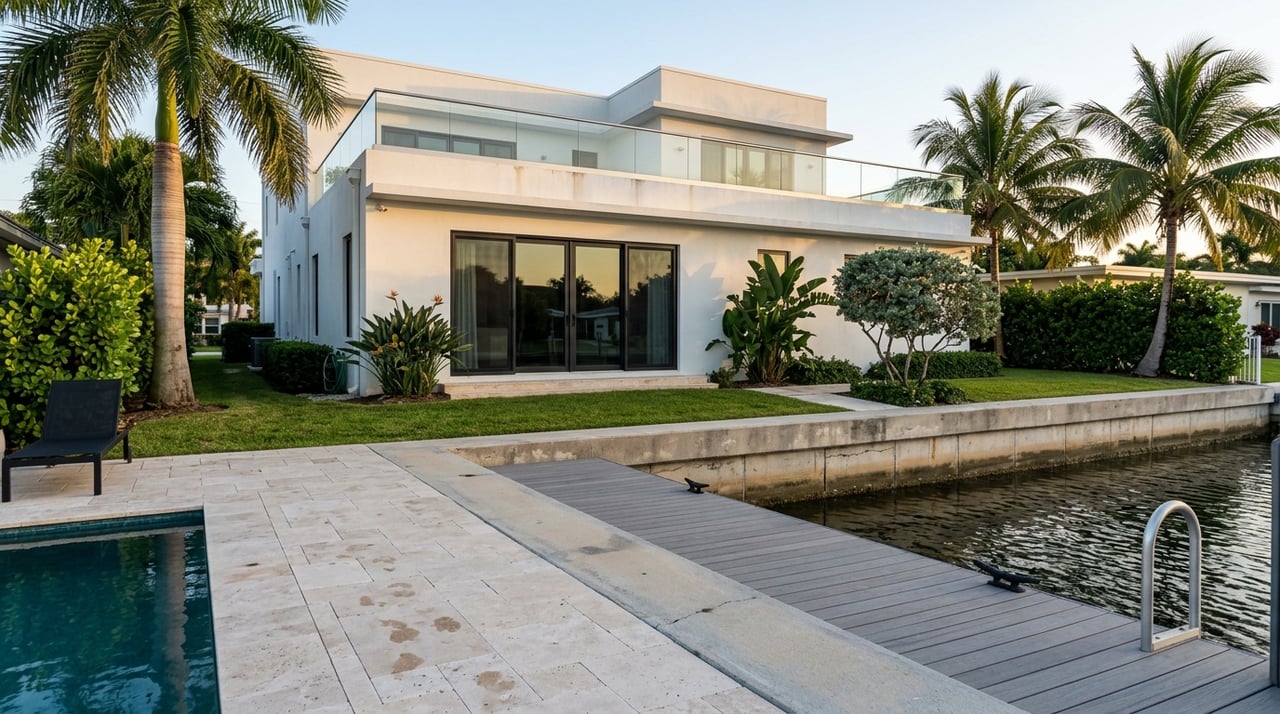
Looking for a waterfront home in Lighthouse Point is exciting, but for boating buyers, the real question is not just whether a house is on the water. It is whether the property truly fits the way you plan to use your boat and enjoy the water. If you are trying to balance dock needs, canal access, bridge clearances, seawall condition, and flood considerations, you are asking the right questions. This guide will help you focus on the details that matter most before you buy. Let’s dive in.
Lighthouse Point has a strong appeal for buyers who want a boating lifestyle built into everyday living. The city describes itself as a small, largely built-out community with water-laced neighborhoods, and it says many homes front its 18 miles of waterways.
That matters because your search here is usually not about finding an empty waterfront lot and building from scratch. The city says more than 95% of Lighthouse Point is developed, so most buyers are choosing among existing homes, existing docks, and established canal routes.
For you, that means the best property is often the one that matches your boat, your preferred water access, and your day-to-day lifestyle. In Lighthouse Point, a beautiful waterfront address is only part of the story.
One of the biggest mistakes boating buyers can make is treating ocean access like a simple yes-or-no feature. In Lighthouse Point, the waterfront is organized around a dense canal network, and the route from your dock to open water can vary depending on the property.
The city’s bridge replacement master plan identifies crossings at places such as Pelican Waterway, Tern Waterway, Alamanda Waterway, Egret Waterway, Coral Key Waterway, Sample Road, NE 31st Court, and NE 28th Street. That confirms what many local buyers quickly learn: two homes may both be on the water, but their boating routes can feel very different.
For most boating owners in Lighthouse Point, Hillsboro Inlet is the nearby route to the ocean. FDOT describes Hillsboro Inlet as a natural channel in Pompano Beach connecting the Atlantic Intracoastal Waterway to the Atlantic Ocean, with an authorized depth of 13 feet.
That makes it an important reference point when you are evaluating whether a property fits your vessel and boating habits. If you plan frequent ocean runs, the practical route from the dock to the inlet deserves close attention.
A U.S. Coast Guard notice for the SR A1A drawbridge at Hillsboro Inlet stated a charted vertical clearance of 13 feet and a horizontal clearance of 60 feet between the fenders. The drawbridge rule also states that from 7 a.m. to 6 p.m., the bridge opens only on signal at the hour, quarter hour, half hour, and three-quarter hour.
In plain terms, bridge timing and clearance can affect your day on the water. If your boat has height requirements or you want easy, fast inlet access, these details should be part of your buying decision from the start.
It is easy to focus on the dock behind the home, but the full route matters just as much. A property deeper inside the canal system may involve more turns, more narrow navigation points, or more bridge checks than a home closer to the Intracoastal.
That does not automatically make one property better than another. It simply means the right choice depends on your boat size, your comfort level, and how often you expect to head out.
As you evaluate boating homes in Lighthouse Point, keep your due diligence centered on real-world use. A home may look ideal online, but the key is whether it works for your vessel.
Consider questions like these:
These are the kinds of details that can shape long-term satisfaction with a waterfront purchase.
Lighthouse Point treats waterfront work as permit-heavy, and that is important for buyers. According to the city’s dock and seawall checklist, projects may require a building application, electrical and plumbing applications when applicable, outside-agency approvals from Broward County, the Florida Department of Environmental Protection, or the Army Corps of Engineers, and signed and sealed plans in many cases.
The city also requires an updated dock or seawall survey before final inspection. If you are buying an existing boating home, it is smart to ask for records tied to past waterfront improvements.
For new waterfront residences or major additions, the city requires two signed and sealed engineer letters confirming the seawall condition and stating that the seawall can support the added upland improvements. That should tell you how seriously the city views seawall performance.
As a buyer, you should ask about the seawall’s current condition, any prior repairs, and whether supporting documentation is available. A strong seawall is not just a maintenance item. It is a core part of waterfront ownership.
When reviewing a property, request as much documentation as possible for previous dock, seawall, and waterfront-related work. You want to know whether permits were pulled, whether inspections were completed, and whether the work was fully finalized.
This is especially important in an established city like Lighthouse Point, where many homes are older and improvements may have been completed over multiple ownership periods. Clear records can help you avoid surprises after closing.
The city states that Lighthouse Point is in a flood-prone area and directs residents to FEMA flood resources. It also maintains FEMA elevation certificates on file and makes some property certificates available upon request.
For buyers, this means flood planning should be part of your home search early, not something left until the last minute. A home’s flood zone, elevation data, and insurance requirements can affect both affordability and peace of mind.
FEMA says flood insurance is separate from homeowners insurance. FEMA also notes that policies usually have a 30-day waiting period unless coverage is lender-required or tied to a flood-map change.
That timing can matter if you are financing the purchase or trying to estimate your true monthly ownership costs. It is wise to get clarity on insurance expectations before you get too far down the road.
Lighthouse Point is largely built out, so many waterfront properties are not brand new. Broward County requires building safety inspections on buildings over 25 years old and over 3,500 square feet, while the city’s building department emphasizes permits, inspections, and the use of licensed, registered contractors.
For you, that means a waterfront home search should include questions beyond finishes and floor plans. You should ask about roof age, flood zone, seawall condition, permit history, and whether previous work received final approval.
In boating-home purchases, older-home due diligence and waterfront due diligence often overlap. A polished remodel does not replace the need to review the property’s infrastructure and records.
The city’s active bridge replacement program and recent canal dredging work are reminders that water access conditions can change over time. That does not mean access is a problem. It means you should approach waterfront ownership with a practical, informed mindset.
If you are comparing properties, it is worth asking whether nearby bridge work or canal improvements could affect navigation, timing, or convenience during your ownership period. Small access differences can have a big impact if boating is central to your lifestyle.
If you are buying a boating home in Lighthouse Point, your goal is to go beyond the listing photos and understand how the property functions in real life. The right home should support your boat, your route to open water, and your comfort with maintenance and insurance.
A strong search process usually includes:
When you take that approach, you are far more likely to find a home that fits both your lifestyle and your long-term ownership goals.
Buying waterfront property in Lighthouse Point should feel exciting, not uncertain. With the right local guidance and careful due diligence, you can narrow in on a home that works on paper and on the water. If you want help evaluating boating access, waterfront condition, and the nuances of Lighthouse Point inventory, connect with Matthew Heinz to schedule a free consultation.
Stay up to date on the latest real estate trends.
Get assistance in determining current property value, crafting a competitive offer, writing and negotiating a contract, and much more. Contact him today.