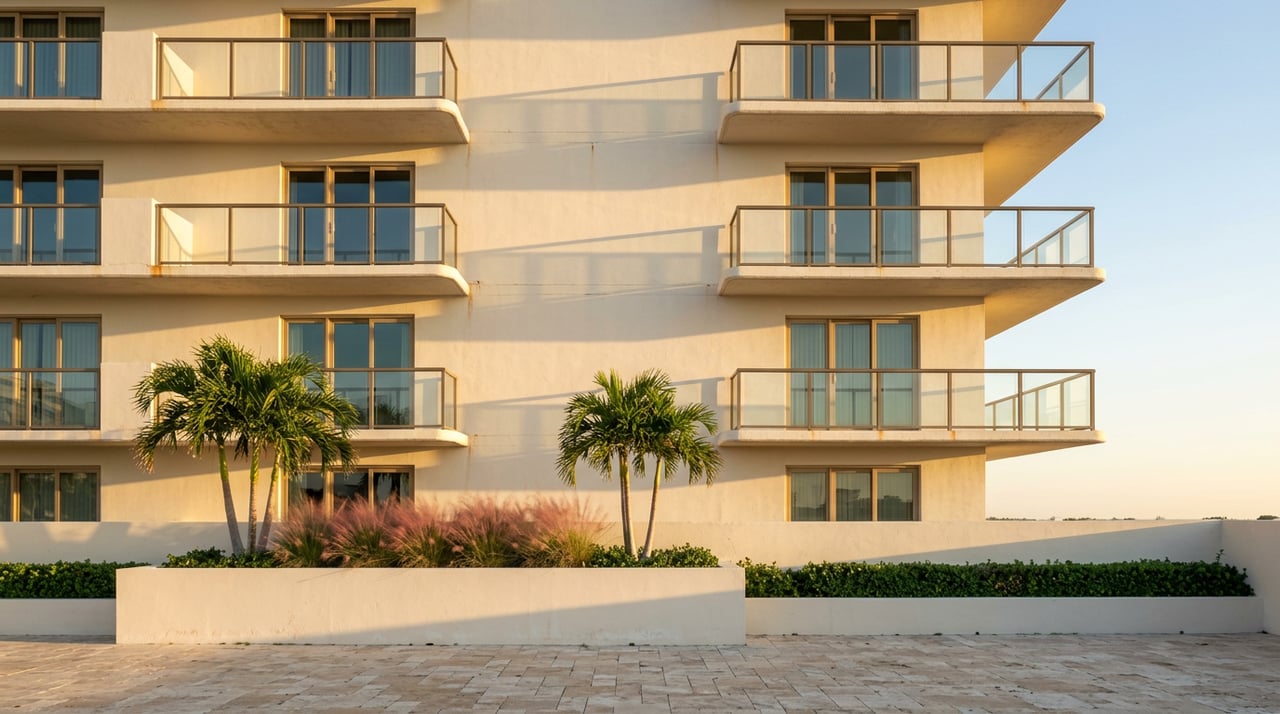
In Pompano Beach, the Condo Inspection Deadline Isn't Where Most Buyers Think It Is
September 24, 2026
September 24, 2026
Ask a buyer touring a 28-year-old oceanfront condo in Pompano Beach whether the building needs to worry about Florida's milestone inspection law, and most will say no. The state rule is 30 years, they'll tell you, so a building built in 1998 has two years left before anyone has to think about it.
In Pompano Beach, that answer is wrong more often than it's right.
Florida's milestone inspection statute sets two different clocks. Buildings get 30 years before their first structural inspection is due, unless they sit within three miles of the coastline, in which case the deadline moves up to 25 years. Pompano Beach stretches along nearly three miles of Atlantic coastline, and the practical effect is that almost the entire city east of the Florida Turnpike falls inside that coastal zone. A condo with a certificate of occupancy from 2001 isn't approaching its inspection deadline. It's already inside the window this year.
That's the part buyers touring the beach corridor tend to miss, and it changes how you should read a listing, a reserve study, and a monthly HOA fee that looks a little too good.
Most of Broward County's condo stock can lean on the 30-year rule as a rough mental shortcut. Pompano Beach can't. The A1A and Atlantic Boulevard corridor saw its heaviest development from the late 1960s through the 1980s, which means a large share of the beachfront inventory is now 40 to 55 years old. Buildings that age aren't approaching their first milestone inspection. Many are already well past it, and some are heading into their second required look under Broward County's own Building Safety Inspection Program, which independently requires inspections for buildings 25 years or older and repeats them every 10 years regardless of when a prior report was filed.
Line up the eras and the pattern is stark. A tower built in the 1970s is now in its fifth or sixth decade of salt exposure. A building from the late 1990s that would still have breathing room under the standard 30-year rule has already crossed Pompano's 25-year coastal threshold. A brand-new mixed-use building downtown, the kind the city's Community Redevelopment Agency has been actively courting, won't face any of this for decades.
That last point matters for how you shop. If avoiding milestone-inspection uncertainty entirely is a priority, newer construction inland from the beach corridor, including projects like Mayla Pompano and the Old Town Square developments that the CRA helped bring to the East District, sidesteps the issue for now simply by being new. If you want the beach, you're buying into the inspection clock along with the view.
Age alone doesn't tell the whole story. Buildings along A1A near the Hillsboro Inlet sit in some of the most salt-exposed air in Broward County, because the inlet's tidal flow concentrates chloride levels beyond what you'd see even a mile or two south. Engineers doing milestone work in this stretch focus hardest on balcony slab edges, parking garage expansion joints, and stairwell connections, the spots where moisture and salt do their slowest, quietest damage over decades.
That's a meaningful distinction for a buyer comparing two similarly aged buildings. A structure a few blocks inland and one directly on the inlet can have identical certificates of occupancy and very different odds of a Phase 2 finding, which is the stage where inspectors order concrete coring and compression testing because Phase 1 turned up substantial deterioration. Phase 2 findings trigger mandatory repairs and, almost always, a special assessment.
For decades, Florida condo boards could vote to waive or underfund reserves for big structural line items, which kept monthly dues artificially low and pushed the real cost of aging buildings onto whoever owned the unit when the bill finally came due. That option closed for eight structural components on budgets adopted after December 31, 2024, and as of January 1, 2026, associations covering those components must be funding reserves at full strength. There's a narrow exception: a board that just completed a milestone inspection can suspend reserve funding for up to two years to redirect money toward urgent repairs the report identified, but that's a short runway, not a loophole.
Layer that on top of two other rules pushing the same direction. HB 913, which took effect July 1, 2025, tightened financial reporting and added mandatory insurance appraisals for larger associations. Then, starting January 1, 2026, a separate law, HB 1021, began requiring associations with 25 or more units to give owners digital access to governing documents, budgets, and reserve studies, with a right to see SIRS and milestone reports within 30 days of completion. If you're touring a Pompano Beach condo this fall and the association can't produce a current Structural Integrity Reserve Study or tell you plainly whether reserves are fully funded, that's not a minor gap. It's a building already out of step with rules that have been in force since last year or earlier.
The consequence that catches buyers off guard isn't the assessment itself. It's what an incomplete inspection does to who can lend on the building. Fannie Mae's list of ineligible condo projects has grown from a few hundred buildings before 2021 to roughly 5,000 nationally, with 696 of those spread across Miami-Dade, Broward, and Palm Beach counties combined. A building on that list can't close with a conventional Fannie- or Freddie-backed loan, which shrinks the buyer pool to cash buyers and borrowers willing to accept a non-warrantable loan at a materially higher rate.
For a seller, that's the quiet cost of a delayed inspection: even if the building eventually passes, the months it spends in limbo can price out a chunk of otherwise qualified buyers. For a buyer, it's a reason to check financing eligibility before falling in love with a unit, not after an accepted offer.
A few documents and questions do most of the work here:
None of this requires the building to be a bad investment. Plenty of older Pompano Beach buildings have kept up with maintenance and will sail through inspection with a clean report and a modest special assessment, if any. The point is knowing which category a specific building falls into before you're under contract, not after.
Does a building's age at purchase matter, or just its age when the law took effect? The 25-year and 30-year thresholds are based on the building's actual age, checked continuously, so a building crossing that line next year needs its first inspection next year regardless of when you bought.
Can a seller refuse to share the reserve study or inspection report? For associations with 25 or more units, a Florida law that took effect January 1, 2026 requires these documents to be posted for owner access within 30 days of completion, which gives buyers a paper trail to request even before closing.
Does a passed inspection mean no future assessments? No. It resets the clock for another 10 years under Broward's county program, but it doesn't fund the reserves needed for the next roof, elevator, or seawall repair. That's a separate conversation with the association's budget.
Pompano Beach's beachfront corridor has real character and real value, and none of this is a reason to avoid it. It's a reason to shop it with the right questions ready. If you're weighing a specific building against the newer construction rising downtown, or you just want a second set of eyes on an association's paperwork before you write an offer, Matthew Heinz can walk through it with you. Schedule a free consultation and get a straight read on what a building's age actually means before you're the one holding the reserve study.
Stay up to date on the latest real estate trends.




Get assistance in determining current property value, crafting a competitive offer, writing and negotiating a contract, and much more. Contact him today.